WE ARE MANY.
WE ARE RAILFANS.

Railfan-Guest
October 25th, 2022
With the forthcoming arrival of his latest book on the Class, Allen Jacksons gives an overview of GWR's Prairie Class.
George Jackson Churchward revolutionised steam locomotive design in Britain and one of his more avant garde designs was the 2-6-2 tank locomotive that is generically referred to as Prairies. The initial design is what we would now regard as a ‘large’ Prairie which later became well known for proliferating suburban services in Birmingham and London. I was to be instrumental for popularising Sir John Betjeman’s ‘Metroland’ where the railway created housing estates along the border of their suburban lines. The Metropolitan invented its own traffic generating system. The fact that the Great Western and Metropolitan were separate companies did not disguise the fact that they shared the same objective.
However the early publicity shots of early large prairies depicted them hauling coal trains of prodigious length the short distance from pit to port in South Wales. Typically until 1903 the ubiquitous 0-6-0 tender engine plodded up and down the system with twenty coal wagons and developed an operating mantra of 1. Coal wagons to port, 2. Bring the wagons back to the mineto be reloaded. Repeat.
The Prairies are mixed traffic locomotives are just as happy on slow and express passenger and even shunting as well as the goods mineral train. All prairies were fitted with lever reverse which meant it was easy to change direction after a shunt. Screw reverse was a good notion with an express passenger train where the running could be fine-tuned with the incremental change to gear position. This fine tuning would often produce increased economy in the right hands. A car driver on a twisty road at speed might wish there was an intermediate gear between, say, third and fourth gear. The car industry has largely overcome this shortcoming with the eight speed gearbox.
Getting back to engines, so useful did they become that the class kicked off in 1903, modified and changed a bit but the last wasn’t built until 1949 under British Railways when diesels were seen as the way forward.
The Great Western, particularly in the far West Country, was less than blessed with sharp curves and steep gradients and Churchward set to and produced another Prairie with much smaller driving wheels and a lower weight to enable greater route availability than its larger cousin.
Both large and smaller Prairies found themselves on express passenger trains, for at least part of the journey to the main line where often a Castle Class 4-6-0 would usually take over.
Large Prairies would appear on the following trains.
- Cheltenham Spa Express (Cheltenham Flyer).
- Pembroke Coast Express.
- Cheltenham Spa Express (Cheltenham Flyer).
- Pembroke Coast Express.
- Torbay Express. (Paignton to Kingswear portion).
- The Mechant Venturer. (Weston-Super-Mare – Bristol Temple Meads).
Small Prairies would appear on the following trains.
- Cheltenham Spa Express (Cheltenham Flyer).
- Pembroke Coast Express.
- Cornish Riviera Express (often double headed).
- Cambrian Coast Express (Pwllheli portion).
The book is profusely illustrated with monochrome photographs from the Great Western Trust, however the opportunity has been taken to publish colour images together with some maps from the book.
All pictures and drawings by the author Allen Jackson.
 Figure 1. 4144 at the Great Western Society’s Didcot Railway Centre.
A locomotive constructed in 1946 representing the much later condition of the large prairies. Curved drop end footplate, large boiler and bunker and tanks, top feed, short safety valve bonnet, D shaped vacuum pipe when stowed, bunker steps on the left hand side. The loco is in the first iteration of the Western Region livery with Egyptian Serif lettering just as the GWR would have done it. The W letter below the numberplate refers to ‘Western’ to avoid confusion with similarly numbered locomotives from other railway companies when first nationalised. The LMS had a Fowler 4F with the same number. Later, other companies were given an extra digit. No front numberplate yet and STJ, Severn Tunnel Junction, for the depot code instead of a cast plate. May 2021.
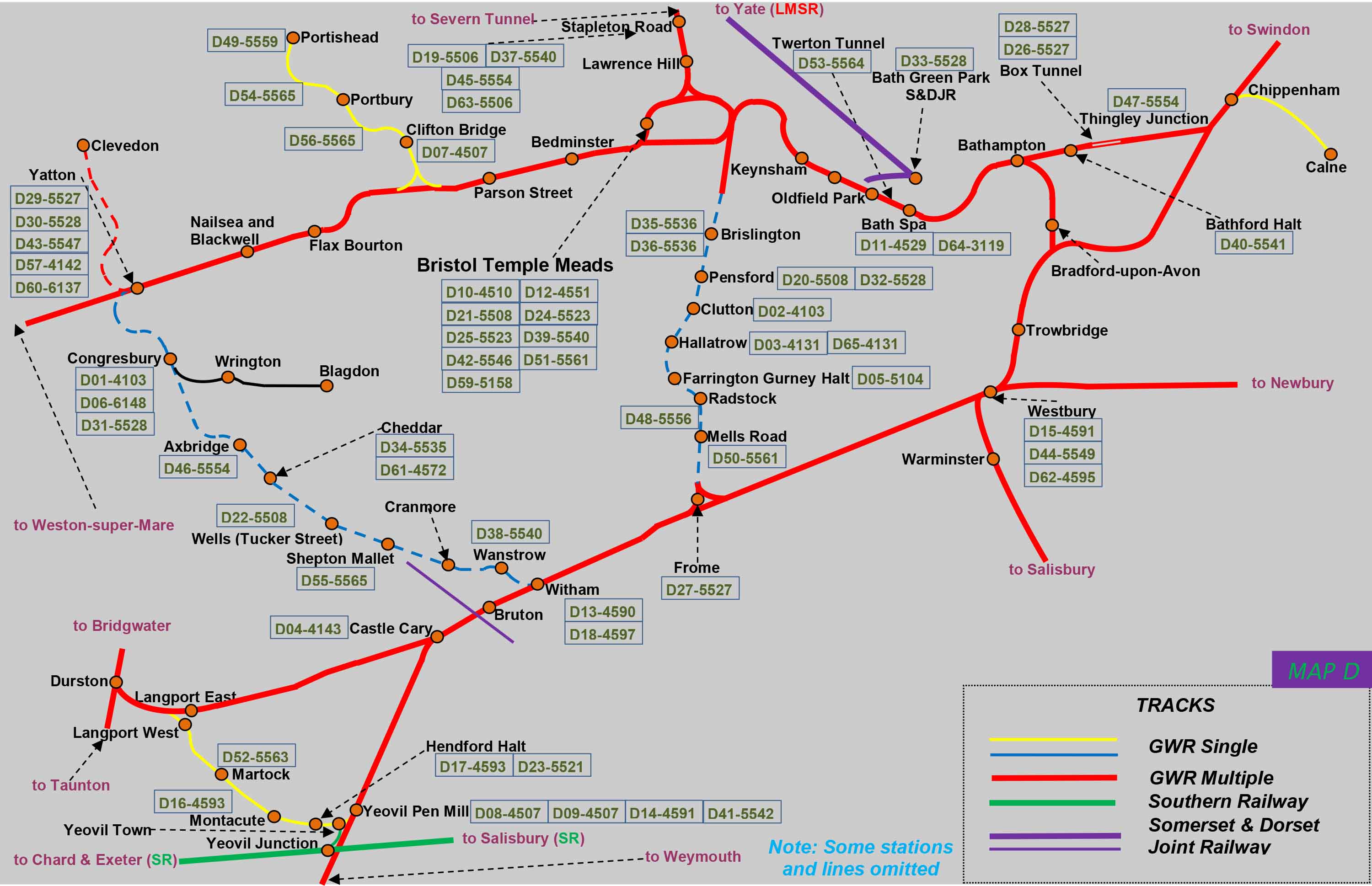 Figure 2. In the book are 21 maps and this is one of them. The book consists of a table of workings of the engines over the years together with their locations. The locations have largely ceased to exist in a railway context so the maps serve as a reminder as to long lost railway places. The table entries are taken from railway books and publications and are referenced in the table and on the map. This solves the knotty questions such as the locomotive at, say, Clutton, with the reader wondering where on earth that is. This is Map D covering Wiltshire, part of Somerset and the Bristol area.
 Figure 3. 5164 is an earlier member of the 5101 class and is seen running round a train at Bridgnorth on the Severn Valley Railway with A headlamps. The loco in the distance is ex-LNER K4 61994 The Great Marquess, now to be found north of the border on the Lochty private railway of John Cameron. 15th May 2004.
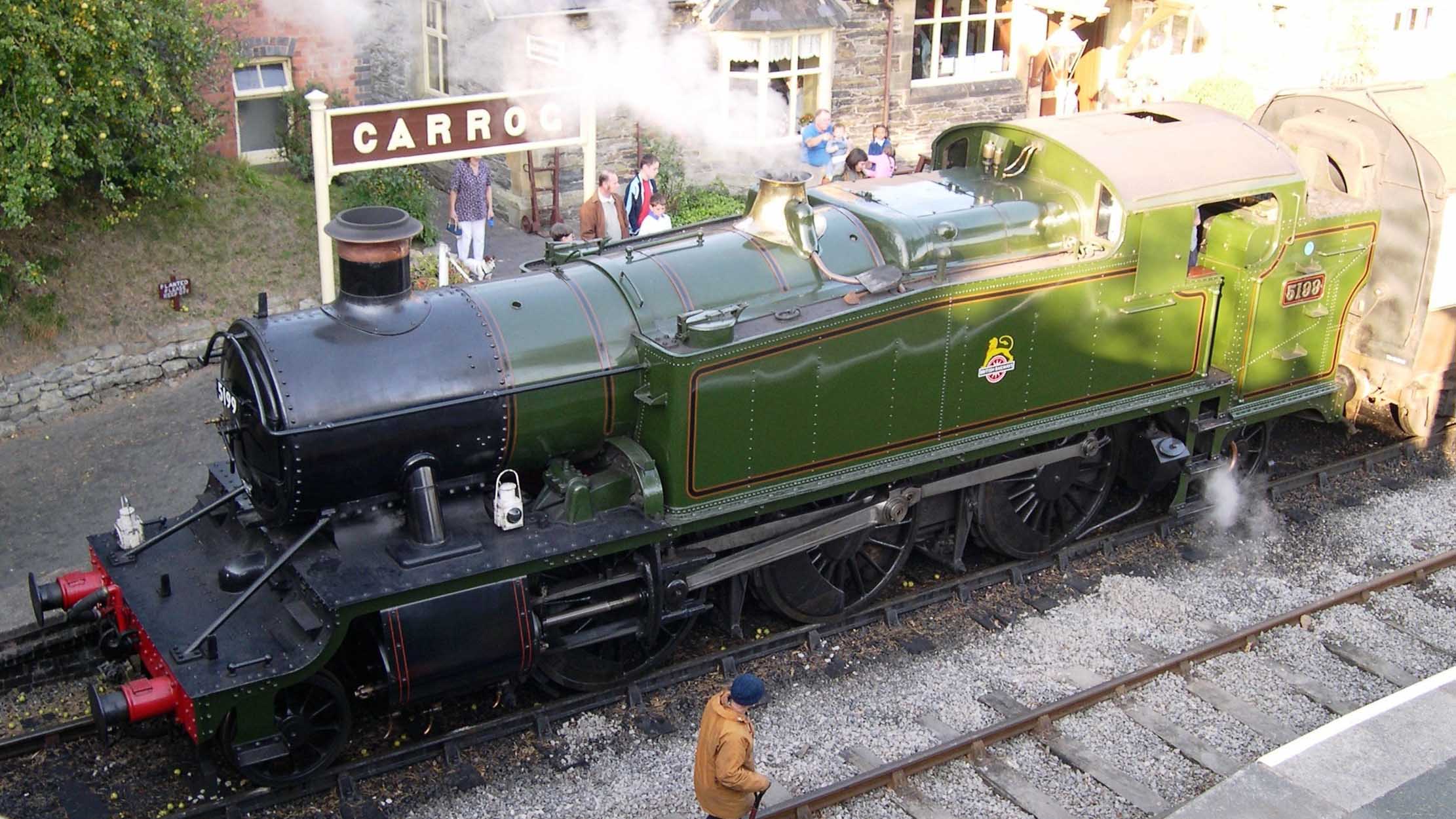 Figure 4. 5101 Class 5199 is newly out-shopped on the 18th October 2003 at Carrog, the then terminus on the Llangollen Railway. Again the loco is in BR livery but with the earlier ‘cycling lion’ emblem and a small one at that. The loco has travelled all over the preservation scene, such is its usefulness.
 Figure 5. 6106 is an example of the last stage of large prairie development with the increased boiler pressure of 225 psi. SLO is painted above the cylinder and this engine would more than likely have been allocated at Slough in its London suburban duty phase. 25th September 2003, Didcot engine shed. In later years many of the class ended up at Oxford. The route availability disc and power class letter moved to above the numberplate with this lettering style, where it remained under BR. 5572 small Prairie in the next engine to the right.
 Figure 6. 5164 in a shed scene at Bridgnorth in company with 4566 and an ex-LMS Ivatt ‘Mickey Mouse’ 2-6-0 46443. An ex-LMS Black 5 is lurking by the shed entrance. 5164 has WLN for Wellington above the cylinder. 10th May 2008.
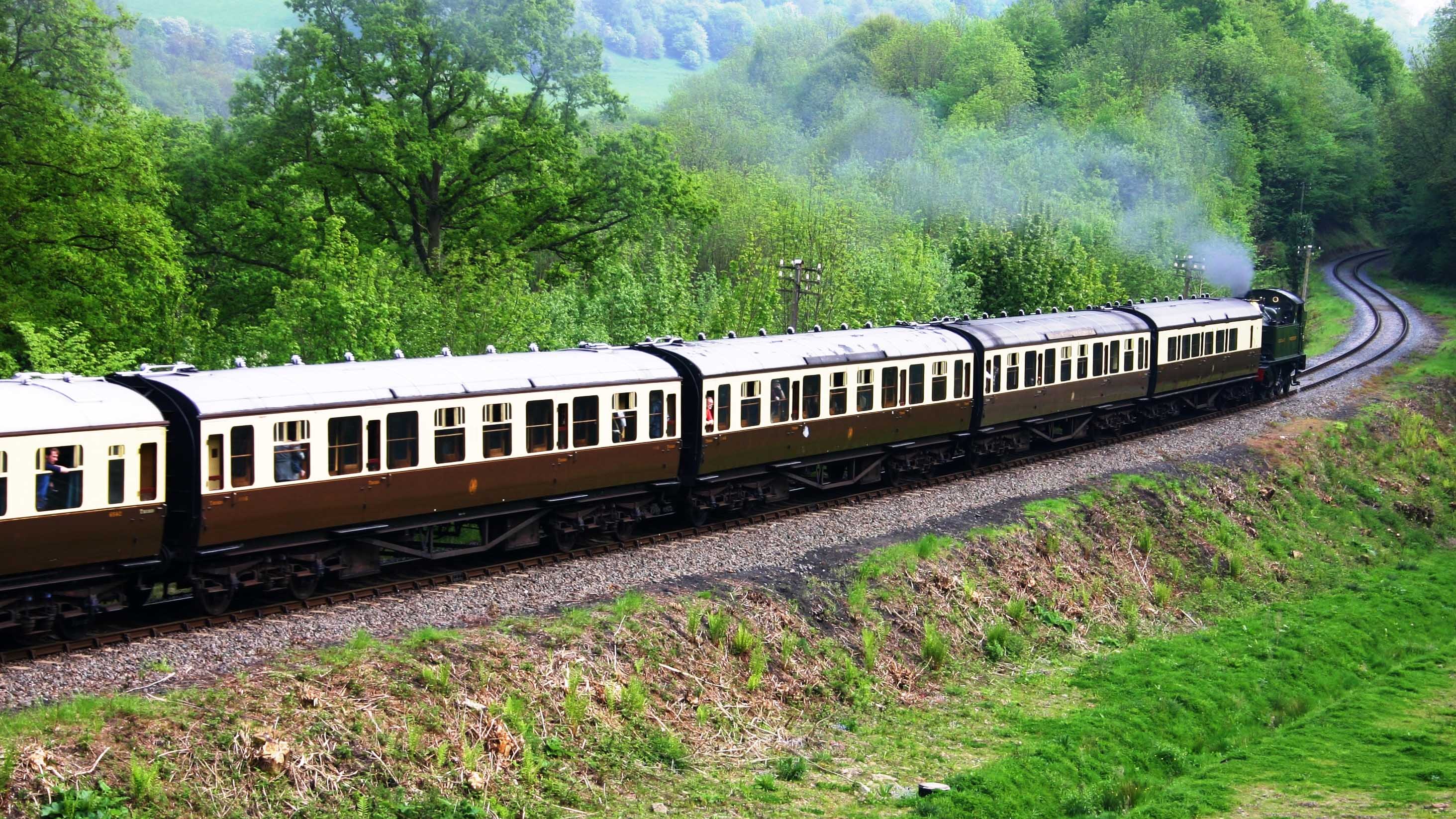 Figure 7. 4566 depicted at Highley on the spoof Cornish Riviera Express although these locos would handle the real thing on the St. Ives portion of the train. When the train ran to eleven coaches it would be double-headed with another of the same class. 4570 was a regular performer. The train is loaded with a fine rake of eight GWR preserved coaches with headboard, headed for Kidderminster although the engine is probably more comfortably loaded with four to six coaches. 10th May 2008.
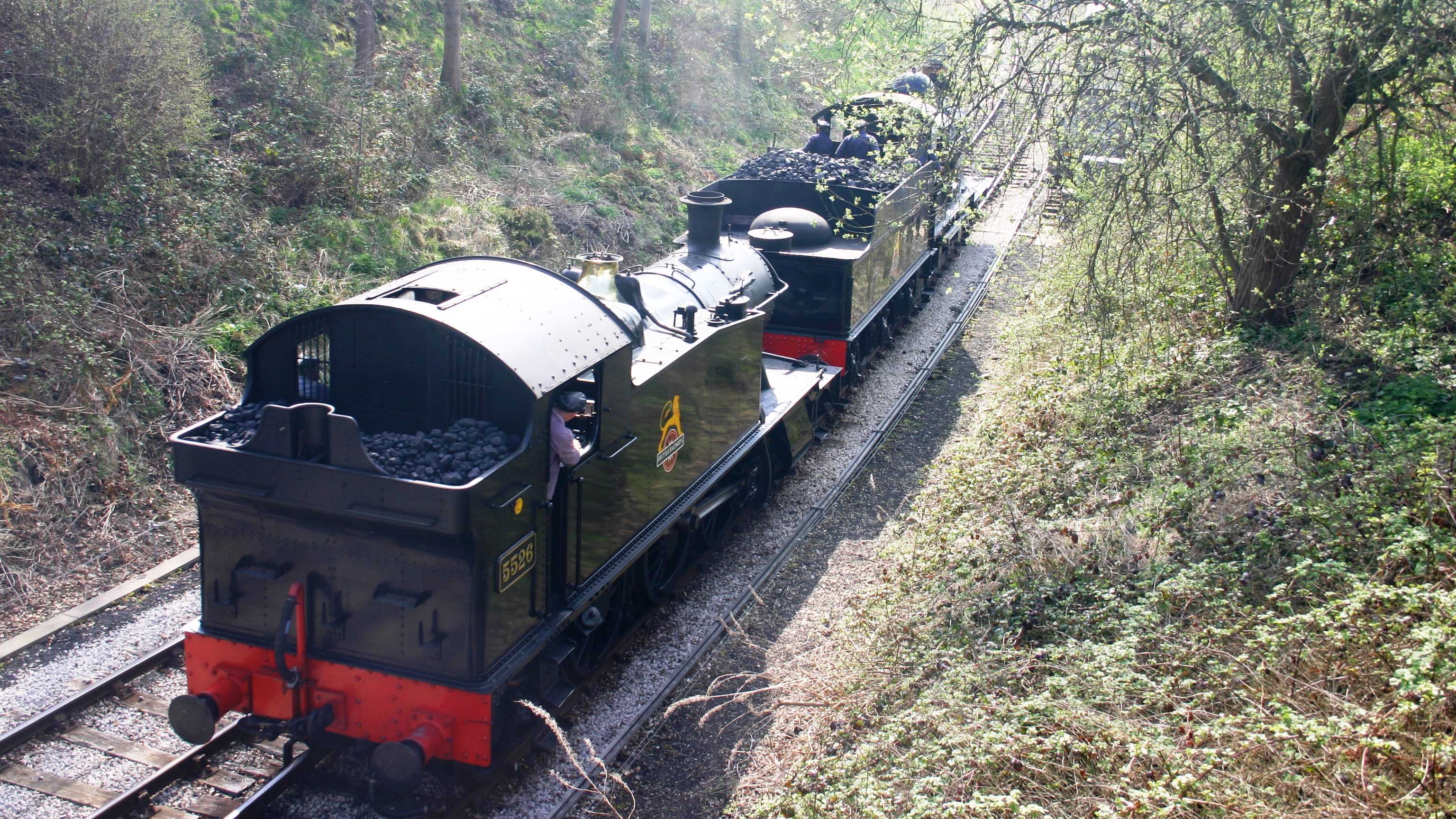 Figure 8. 5526 coupled to Dukedog 9017 Earl of Berkeley at Carrog and running round their train. The Dukedog was carrying a Festiniog Railway commemorative headboard when special trains were run for the FR Annual General Meeting. This train from Llangollen to Carrog was a homage to those AGM trains. The DukeDog was so called after an amalgamation of two classes, the ancient Duke class and the not quite so ancient Bulldog. The purpose of which was to produce a 4-4-0 capable of occupying lighter laid lines like the Cambrian. 15th April 2009.
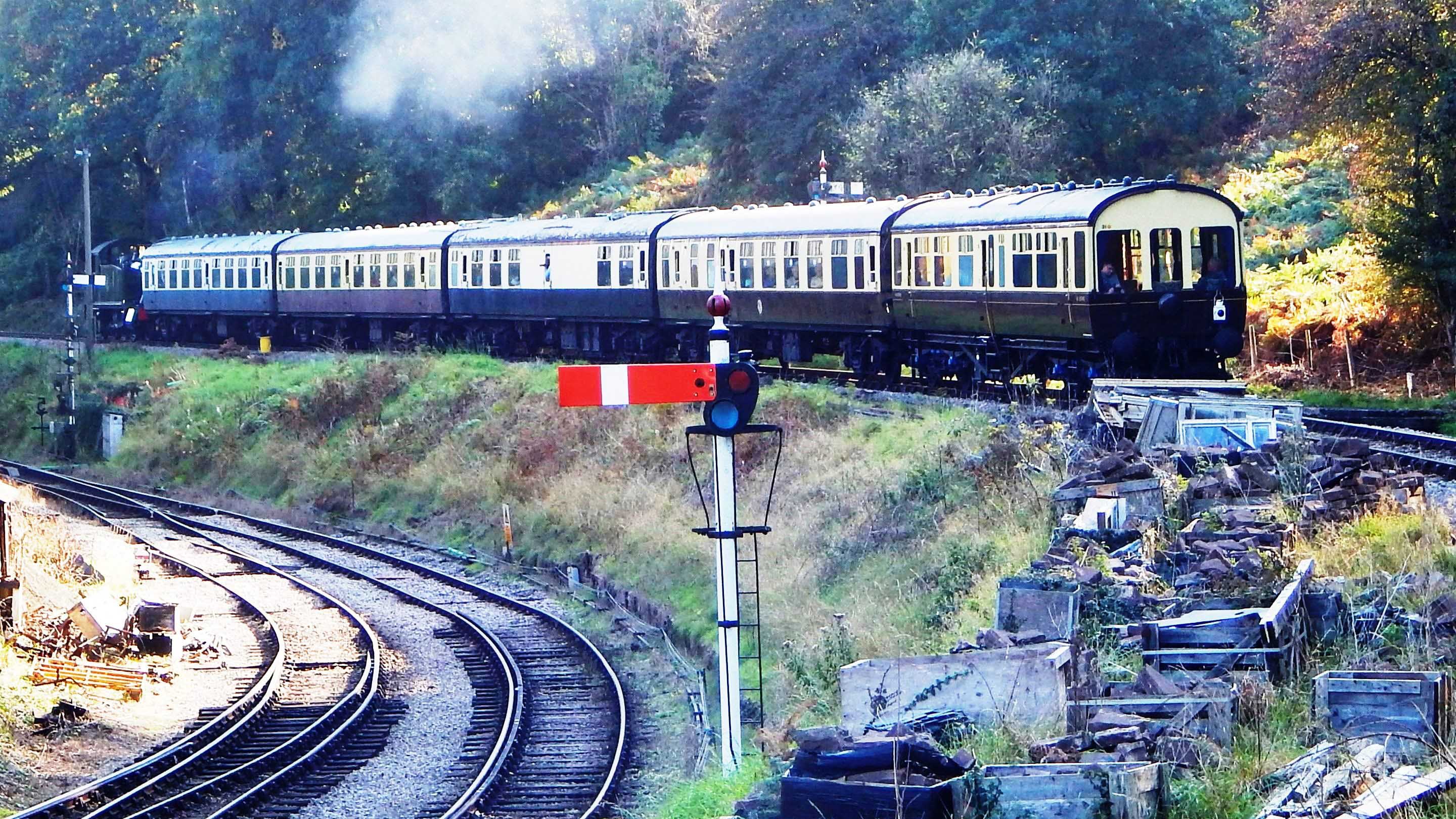 Figure 9. 5541 sets off for Lydney from Norchard with very little effort or fuss with its five coaches, the last of which is a former district engineer’s saloon and now does duty as an observation coach for a minimal premium fare. The railway is dual level at Norchard and all through trains to Parkend and those environs occupy the high level tracks. 10th October 2018.
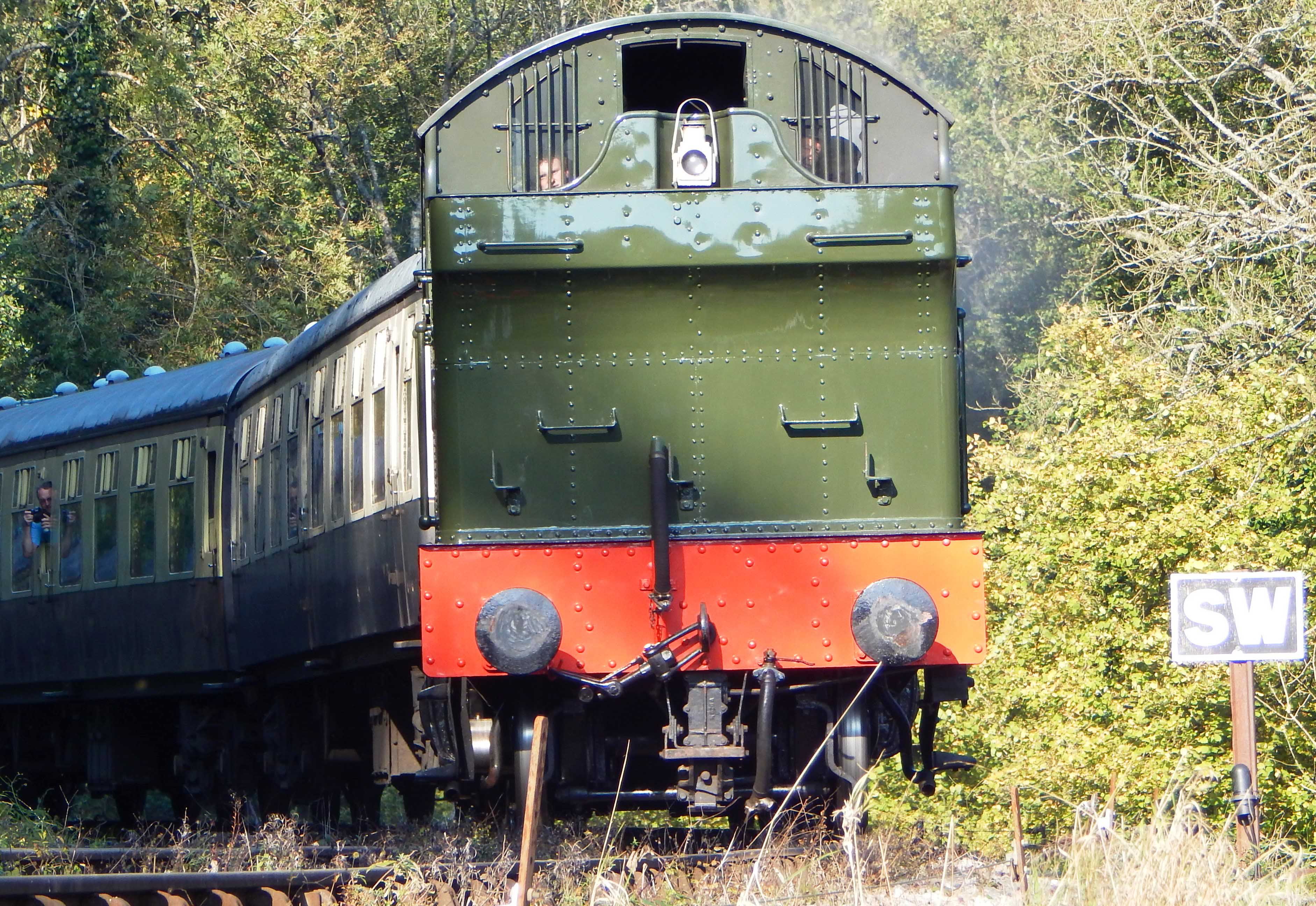 Figure 10. 5541 demonstrates it is possible to see out of the rear windows if the view is not obscured by coal. The rear bufferbeam is noticeably deep and the AWS shoe prominent. Larger prairies working in the former London Transport areas had to have the AWS shoe clipped up out of use so that he loco was not welded to the third rail. The small prairies were not fitted with fireman’s side bunker steps as were the larger ones in later years. This is a BR liveried loco as there is no painted number on the rear buffer beam. 10th October 2018.
 Figure 11. 5542 is on the last train of the day at Stogumber station on the West Somerset Railway. One of the owners was telling me the loco would only use half a dozen shovelfuls of coal on the journey and I told him I was putting more than that on the coal fire of the cottage I was staying in. He also said that the only deviation from the original build of the loco was the stainless steel front handrail. The engine has TN for Taunton by the front bufferbeam which presumably means Minehead sub-shed. 25th October 2003.
You can learn about GWR's Prairie Class in Allen's latest release by Amberley Books: https://www.amberley-books.com/gwr-locomotives-the-prairies.html